
Analysis: Cboe Volatility Index
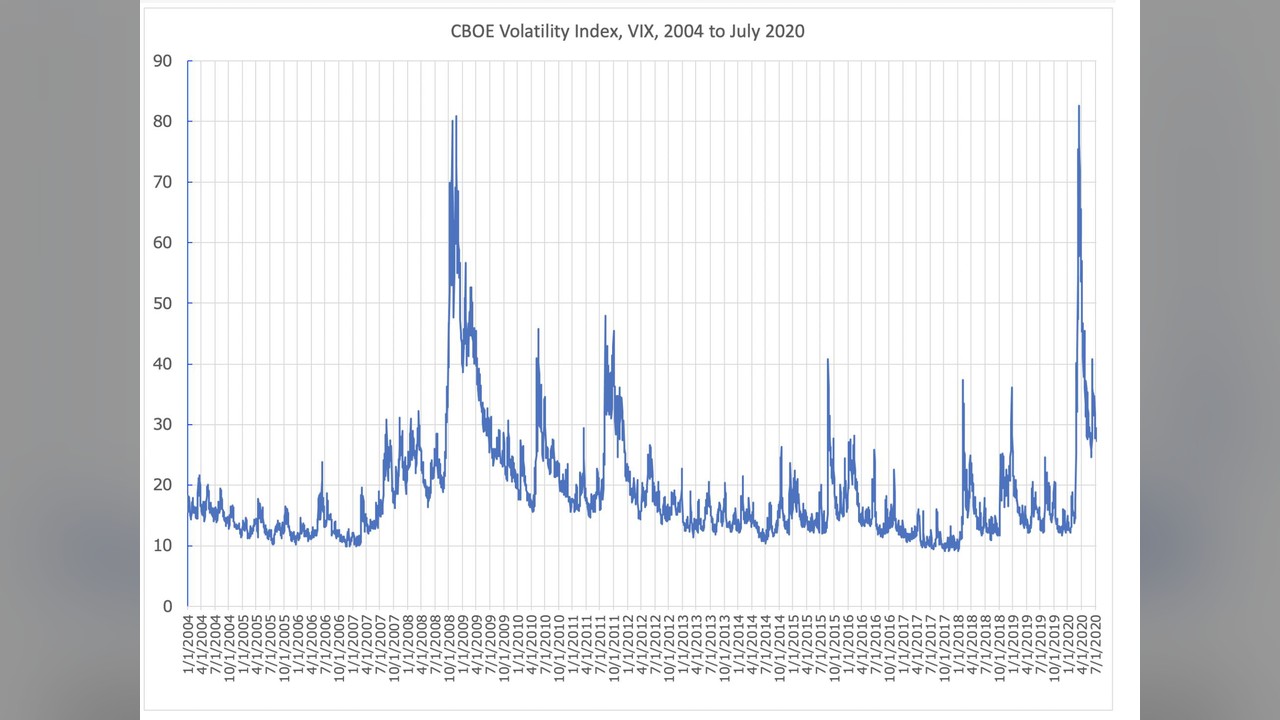
The Volatility Divergence: Cboe VIX and the Shift Toward Single-Stock Risk
The Cboe Volatility Index (VIX) continues to serve as the primary barometer for equity market sentiment, yet a widening gap has emerged between macro-index volatility and idiosyncratic single-stock risk. While the VIX tracks broad market expectations, recent data indicates that average single-stock volatility has surged to record levels relative to the VIX, signaling a fundamental shift in how risk is distributed across the U.S. equity landscape.
Market and Global Impact
The traditional inverse correlation between the VIX and equity prices is currently under scrutiny. While the VIX typically spikes during market downturns, current market conditions have demonstrated instances where the VIX and equities rise in tandem. This anomaly forces institutional traders to re-evaluate exposure, as a rising VIX no longer serves as a binary signal for a market crash, but rather as a complex indicator of the broader volatility environment.
Simultaneously, the operational landscape for volatility trading is expanding. Cboe Global Markets, Inc. has secured SEC approval to offer extended trading hours for select multi-listed single-stock options. This policy shift allows market participants to hedge or speculate on volatility outside of standard trading windows, directly responding to the increased volatility seen in individual equities.
The divergence between the VIX and single-stock volatility suggests that while the broad market may appear stable, underlying systemic risk is concentrating within individual tickers. This “hidden correlation” extends to the U.S. Dollar Index, as traders attempt to decipher the relationship between currency strength and equity volatility.
Data Analysis
The following tables synthesize the current state of volatility metrics and regulatory shifts based on available market intelligence.
Volatility Correlation Matrix
| Metric | Trend | Market Implication |
|---|---|---|
| VIX vs. Equities | Occasional Positive Correlation | Traditional inverse relationship is decoupling; risk exposure requires recalibration. |
| VIX vs. Single Stock Vol | Divergent | Macro volatility is falling while single-stock volatility hits record highs. |
| VIX vs. USD Index | Correlated | Traders are monitoring the US Dollar Index to decipher hidden volatility drivers. |
Operational and Future Instruments
| Instrument/Policy | Status | Impact |
|---|---|---|
| Single Stock Options | SEC Approved (Extended Hours) | Increased liquidity and hedging capability for idiosyncratic risk. |
| VIX Dec 2026 Futures | Active (VXZ26) | Long-term volatility pricing is being established well into the next cycle. |
| Macro Volatility | Declining | Broad market indices show reduced volatility compared to individual components. |
Forward Outlook
The trajectory of the Cboe Volatility Index is no longer a sufficient standalone metric for risk management. The record-breaking jump in single-stock volatility relative to the VIX indicates that the primary source of market instability has shifted from systemic macro shocks to company-specific catalysts.
Investors are increasingly looking toward long-dated instruments, such as the December 2026 VIX futures (VXZ26), to price in volatility over a multi-year horizon. This suggests a strategic pivot toward long-term hedging in an environment where short-term macro stability masks deeper, asset-specific turbulence.
The SEC’s approval of extended trading hours for single-stock options is a critical policy pivot. By expanding the window for options trading, the regulator is acknowledging the necessity for real-time risk mitigation in a market where single-stock volatility is decoupled from the VIX. The ability to react to volatility in real-time, across extended hours, will likely become a standard requirement for institutional portfolios managing high-concentration equity holdings.
Ultimately, the “Volatility Matrix” is evolving. The reliance on the VIX as the sole “fear gauge” is being replaced by a more granular approach that weighs the US Dollar Index, broad index futures, and record-high single-stock volatility. The divergence between these metrics suggests that the next phase of market instability may not manifest as a broad index collapse, but as a series of high-volatility events centered on individual equities.