
Analysis: Redistricting In Alabama
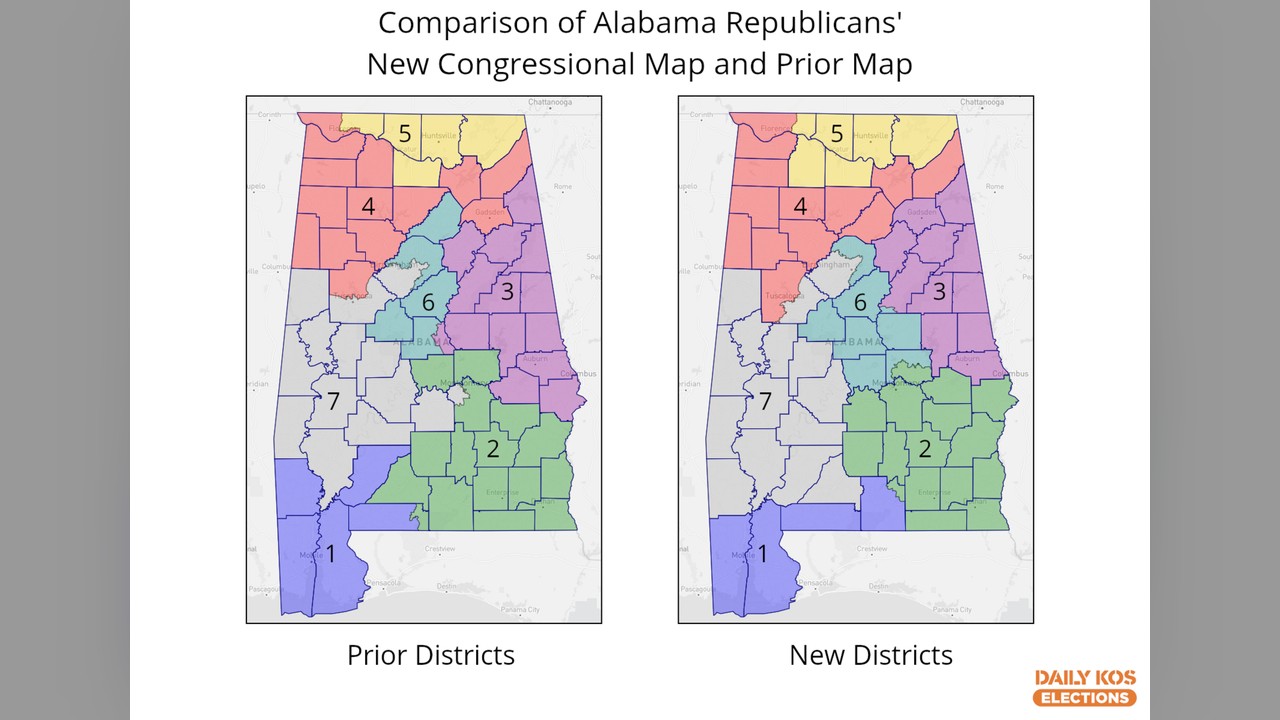
Judicial Blocked: Federal Court Halts Alabama’s GOP-Drawn Congressional Map
A federal three-judge panel has issued a temporary block on Alabama’s 2023 congressional redistricting map, ruling that the plan intentionally discriminated against Black voters. The court determined the map violates the 14th Amendment by unfairly redrawing a majority-Black district, effectively stalling the Alabama legislature’s attempt to implement the revised boundaries for upcoming elections.
Institutional and Electoral Impact
The judicial intervention creates immediate instability in Alabama’s congressional battlefield. By preventing the enactment of the 2023 map, the court has disrupted the Republican-led legislature’s strategy to reshape the state’s electoral geography. The ruling signals a high-stakes legal confrontation over the Voting Rights Act and the 14th Amendment, placing Alabama’s legislative intent under federal scrutiny.
While the immediate impact is localized to the state’s House representation, the ruling serves as a critical precedent for redistricting disputes across the United States. The block ensures that the existing electoral map remains in place until the legal challenge is resolved, preventing a shift in voter distribution that the court deemed racially discriminatory.
Legal and Structural Analysis
The core of the dispute centers on the intentional dilution of Black voting power. The three-judge panel specifically targeted the effort to redraw one of the state’s majority-Black districts, viewing the move not as a neutral administrative adjustment, but as a targeted attempt to disenfranchise a specific demographic.
The following table outlines the current status of the redistricting conflict based on available judicial findings:
| Metric | Status/Finding | Legal Basis |
|---|---|---|
| Map Status | Temporarily Blocked | Federal Court Order |
| Primary Violation | Racial Discrimination | 14th Amendment |
| Targeted Action | Redrawing of majority-Black district | Intentional Discrimination |
| Legislative Intent | Implementation of 2023 Map | Blocked for upcoming elections |
| Judicial Body | Three-judge federal panel | Federal District Court |
The court’s decision emphasizes that the legislatively enacted plan was not merely flawed, but intentionally discriminatory. This distinction is critical for the subsequent appeals process, as it moves the argument from technical mapping errors to constitutional violations.
Forward Outlook
Alabama is expected to appeal the ruling. The state’s legislative leadership has consistently pushed for the 2023 map, and a higher court’s intervention will be necessary to overturn the current block.
The immediate trajectory involves three primary variables:
- The Appeals Process: The speed and outcome of the appeal will determine whether the 2023 map is ever implemented or if the state must draft an entirely new proposal that satisfies federal requirements for racial equity.
- Election Cycle Timing: Because the block applies to upcoming elections, the window for redistricting is narrowing. Any further delays may force the state to operate under outdated maps or court-mandated boundaries.
- Legislative Response: The Alabama legislature must now decide whether to defend the current map in court or proactively revise the boundaries to avoid further judicial sanctions.
Until a final ruling is reached or a new map is approved, the 2023 congressional map remains inert, and the state’s electoral landscape remains in a state of judicial suspension.